
 International Society of Electrochemistry
The Old Town of Plovdiv
The tour of the Old Town of Plovdiv will take place in the afternoon of June 3, 2014.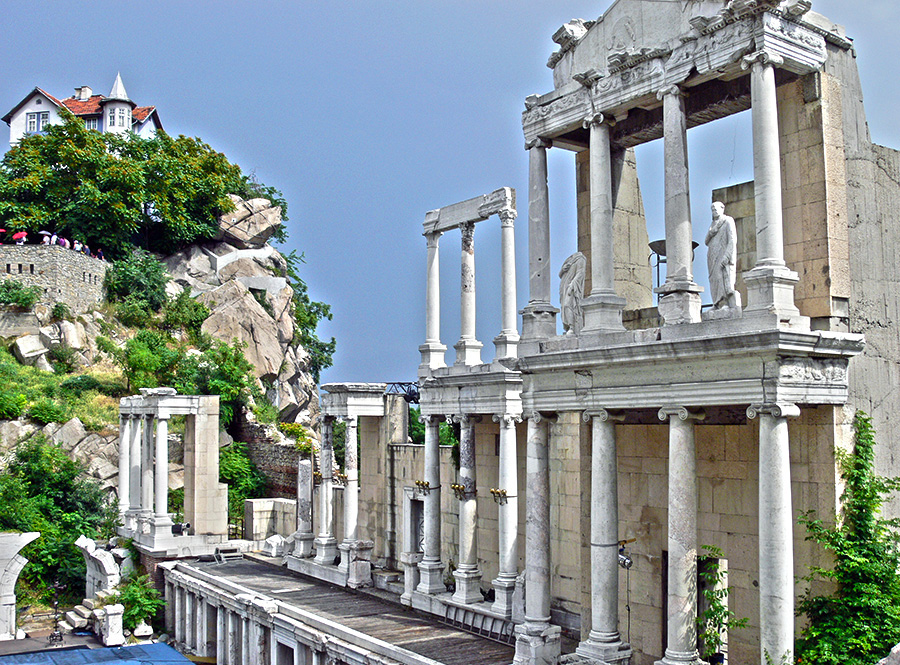
Plovdiv – the ancient Philipopolis is one of the oldest towns in Europe. It was inhabited by the Thracians, Romans, Goths, Slavs and Ottomans whose traces have turned the town into a museum.
 Plovdiv is the second largest city in Bulgaria situated 150 km to the east of Sofia. Its distinctive location on these ancient crossroads has stimulated strong cultural and political influences from East and West civilizations, and yet maintained its unique cultural identity. Being older than most of the oldest towns like Rome, Athens, Carthage or Constantinople, and almost contemporary of Troy, Plovdiv is a town built upon layers of towns and a culture developed upon layers of cultures.
No one knows the initial name of the settlement; its first known name is the melodious Thracian word of Eumolpia. The city had many different names through the centuries given by different conquerors, like Philipopolis after Philip II Macedonian, the father of Alexander the Great, or Trimontium during the time of Roman Empire, or Paldin /The Luxuriant/ given by Bulgarians, etc.
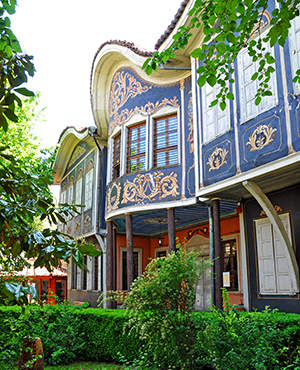
Plovdiv is a picturesque town, with many parks and gardens, museums and archaeological monuments. Its old part, called the Old town, with houses from the National Revival period (18-19th century), is an imposing open-air museum situated on the three hills of the ancient Trimontium. One of the most remarkable sights of the town is the Ancient Theatre (a well-preserved Roman theatre).
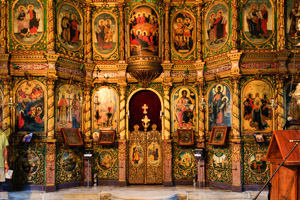 Other important architectural sites are The Roman Bath and Pretorium, Roman mosaics, Ethnographic Museum, the houses of Balabanov and Hindliyan and many others. Saints Constantine and Elena Church is a typical representative of 19th century architecture. Here the miraculous icon of Saints Constantine and Elena is preserved.
Plovdiv is also famous as the city of painters, a Bulgarian Mon Martre of sorts.
The tour includes lunch in a cosy restaurant in the old town of Plovdiv as well a visit to the Ethnographical museum – the second largest specialized museum of this type in Bulgaria. It is an acknowledged scientific–educational institution and an attractive center for cultural tourism. The museum was established in 1917 and since 1938 it has been located in Kuyumdzhieva house, a cultural monument of national significance. The tour will conclude with a visit to the House of Antoniadi features the old apothecary shop “Hippocrates” and the Museum of pharmacy, which are unique for Bulgaria.
